Red Light Therapy Benefits: What the Research Actually Shows
· By Dana Whitfield
Red light therapy has moved from dermatology offices and sports medicine clinics into millions of living rooms over the past decade, and it is easy to see why. Panels and wraps that emit red and near-infrared light promise a long list of benefits, from smoother-looking skin to faster recovery after a hard workout to less achy joints. Some of that promise traces back to a surprising source: NASA-funded research into LED lighting originally built for growing plants in space, which researchers later found also encouraged human cells to heal and repair themselves faster.
Not every claim made about red light therapy holds up equally well under scrutiny, and the strength of the evidence differs quite a bit depending on what you are hoping it will do for you. Below, we walk through what peer-reviewed research on photobiomodulation, the technical term for this kind of light-based therapy, actually shows across four areas: how it works at a cellular level, skin health, muscle recovery, and joint comfort, citing the studies themselves rather than the marketing claims that tend to circulate around them.
How Red Light Therapy Works
Red light therapy, often grouped under the broader term photobiomodulation, uses specific wavelengths of red and near-infrared light, delivered by LEDs, that pass into the skin and are absorbed by structures inside cells called mitochondria. The idea is that absorbed light energy helps mitochondria produce more cellular energy, which in turn may support the body's own repair processes. Much of the foundational research on this mechanism traces back to NASA-funded work led by Dr. Harry Whelan and colleagues at the Medical College of Wisconsin, who studied near-infrared LED arrays originally built for growing plants aboard the space shuttle. Their results, published in the Journal of Clinical Laser Medicine & Surgery in 2001, showed that LED irradiation accelerated wound healing and cell growth in laboratory and animal studies. That early work helped set off two decades of follow-up research into red and near-infrared light for skin, muscle, and joint applications, some of which is more convincing than others.
Here is a quick summary of what researchers in each area have reported, along with the actual source behind each finding:
| Area studied | What researchers found | Source |
|---|---|---|
| Skin | Stimulated fibroblasts (collagen-producing cells) and supported wound repair across a wide body of lab and clinical studies | Avci et al., Seminars in Cutaneous Medicine and Surgery, 2013 |
| Cellular energy & circulation | Near-infrared LED light activated mitochondrial energy production and accelerated healing in wound and cell-culture studies | Whelan et al., Journal of Clinical Laser Medicine & Surgery, 2001 (NASA-funded) |
| Muscle recovery | Reduced post-exercise blood markers of muscle damage (creatine kinase, lactate) in controlled trials with athletes | Leal-Junior et al., Brazilian Journal of Physical Therapy, 2019 |
| Knee joint comfort | Evidence is split: a 2015 meta-analysis of 9 trials found no significant pain difference versus placebo; a larger 2019 meta-analysis of 22 trials found a significant reduction, but only at specific doses and wavelengths | Huang et al., Osteoarthritis and Cartilage, 2015 · Stausholm et al., BMJ Open, 2019 |
Skin Health and Healing Benefits
Skin is where red light therapy has the deepest research history. A frequently cited 2013 review by Avci and colleagues, published in Seminars in Cutaneous Medicine and Surgery, summarized decades of laboratory and clinical work showing that low-level red light exposure can stimulate fibroblasts, the cells responsible for producing collagen, support faster wound closure, and calm inflammation in skin tissue. The same review notes that results depend heavily on wavelength, dose, and consistency of use, which is part of why at-home red light devices vary so widely in what they can realistically deliver compared with the clinical-grade equipment used in the original studies.
Muscle Recovery After Exercise
Athletes and physical therapists have taken a particular interest in red and near-infrared light for post-workout recovery. A 2019 set of clinical and scientific recommendations authored by Leal-Junior and colleagues, published in the Brazilian Journal of Physical Therapy, reviewed a series of randomized, placebo-controlled trials and found that photobiomodulation applied around exercise sessions was associated with lower blood levels of creatine kinase and lactate, two markers commonly used to track muscle fatigue and damage. Some trials in that body of research also reported athletes feeling less soreness in the days following intense training. The authors are careful to note that effects vary by dose, timing, and the specific muscle group being treated, so it is not a guaranteed fix for every type of exercise-induced soreness.
Joint Comfort and Circulation
Joint discomfort, especially in the knee, is one of the most common reasons people try red light therapy in the first place, and it makes sense given the numbers: the Centers for Disease Control and Prevention reported that 21.2% of U.S. adults, roughly 53.2 million people, had diagnosed arthritis between 2019 and 2021, with osteoarthritis of the knee among the most common presentations. The evidence here is genuinely split, and we would rather show you both halves. A 2015 systematic review and meta-analysis by Huang and colleagues in Osteoarthritis and Cartilage pooled 9 randomized trials covering 518 patients and concluded that the best available evidence at the time did not support low-level laser therapy for knee osteoarthritis — the pain score difference versus placebo was not statistically significant (PubMed 25914044). A larger 2019 meta-analysis by Stausholm and colleagues in BMJ Open, covering 22 trials and 1,063 patients, did find a significant reduction in pain and disability — but only at specific doses and wavelengths (4–8 J at 785–860 nm, or 1–3 J at 904 nm), with the effect peaking two to four weeks after the end of treatment (BMJ Open 2019). Major treatment guidelines still stop short of recommending it as a first-line therapy. We sell a consumer wrap, not a clinical laser, and we have no way of telling you it hits those doses. Separately, some smaller studies point to improved local blood flow in tissue exposed to red and near-infrared light, which is one proposed reason people report their joints feeling warmer and looser during and after a session.
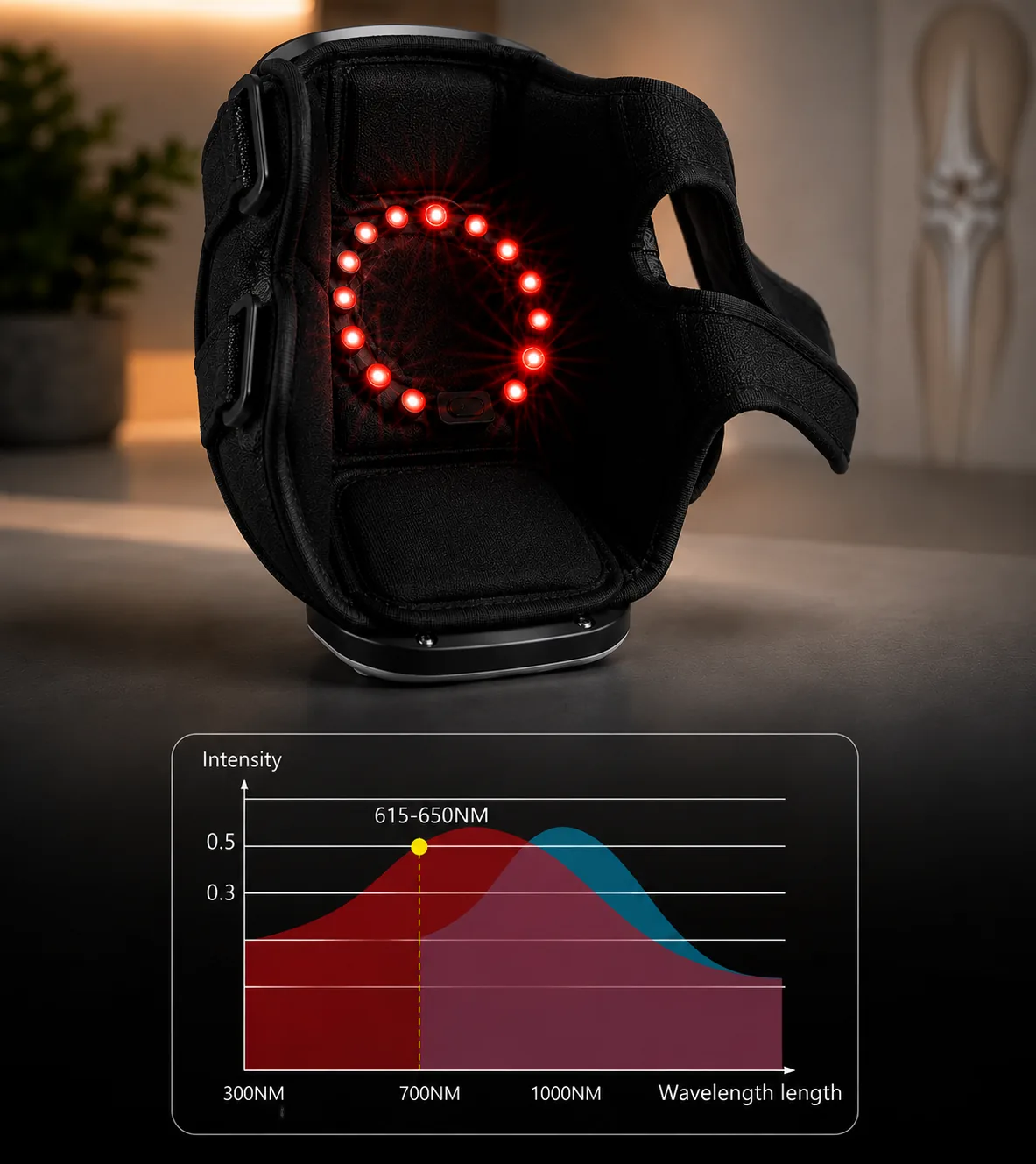
This is the space where at-home devices like the GlowKnee red light and heat knee massager fit in: rather than a clinical treatment, it is designed as a comfort and relaxation tool that combines LED red and infrared light with a heat function and adjustable vibration, wrapped around the knee joint with adjustable velcro straps. If you are weighing red light against heat for knee comfort specifically, our breakdown of how red light and heat work together for knee comfort and our look at why heat is often paired with light therapy in recovery tools both go deeper into that comparison. We also cover the knee-specific research in more detail in our guide to red light therapy for knee pain, and address the broader "does it actually work" question in our review of the evidence on red light therapy and pain. You can also read what verified GlowKnee buyers say about comfort and ease of use. As with every use case discussed here, this is about comfort and relaxation support, not a substitute for medical diagnosis or treatment of joint conditions, so see a doctor for persistent or worsening knee pain.

Dana Whitfield · Wellness Product Tester at GlowKnee
Dana has spent the past several years testing at-home recovery and wellness devices, from massage tools to light therapy panels, and writes GlowKnee's product guides with an emphasis on practical takeaways over hype.